
Lawrence County Projected Release Dates
Mississippi’s public MDOC term is Tentative Release Date. It is the anticipated release date after applicable time earned and credit for time served have been included. A Maximum Discharge Date is a different milestone: it is the expected end point without early-release allowances, subject to lawful sentence and credit corrections. A Parole Eligibility Date is only the first point at which a person may qualify for a Parole Board decision. None of these labels, standing alone, proves that physical release occurred.
A Lawrence County Jail detainee awaiting trial normally has no fixed projected release date. Release may follow bond, a recognizance order, dismissal, a later sentence, or another judicial act. A second warrant or agency hold can keep the person confined even after one cause is resolved. For a short county sentence, the commitment order, jail-time credit, and Sheriff’s calculation matter. MDOC’s state-prison formula should not be applied to that local term unless MDOC has legal custody.
The distinction also changes which date deserves weight. A docket may state a future event, bond term, or sentence, but the jail records actual movement. MDOC calculates dates only after state sentence information enters its system. When one court cause is resolved, another cause or outside hold may remain. Ask both what legal authority changed and whether the person went to the community or another custodian.
Find a Lawrence County Release Date
Start with custody type. A person sentenced to the Mississippi Department of Corrections may be placed anywhere the statewide system assigns, because no MDOC prison is listed in Lawrence County. Use the official MDOC Inmate Search and match the MDOC number, date of birth, sentence, and county of conviction. The county field can connect a state record to Lawrence County even when the institution is elsewhere. A local jail episode requires the Sheriff and court instead.
- Identify whether the person is held pretrial, serving a county sentence, or serving an MDOC sentence.
- For MDOC custody, search by MDOC number or exact name and open the matching detail record.
- Read Location and Tentative Release Date together. A named institution shows current placement, not completed release.
- For county custody, obtain the sentencing or release order, eligible jail credit, and the Sheriff’s current calculation.
- Check for a later Board action, detainer, court order, or supervision status before relying on the date.
- Confirm actual departure through the custodian’s movement record or an official discharge certificate.
The Lawrence County released inmate record path explains how the Sheriff’s release entry and the court order work together. A court document supplies the legal basis, while the actual custodian records when and where the person moved.
Lawrence County MDOC Date Fields
An MDOC detail record contains more than one date. It can show entry and location-change information, sentence length, county of conviction, sentence date, and the Tentative Release Date. These fields must be read as a group. A name match alone is weak, and the future tentative field does not override the offense, sentence structure, current location, or other custody.
The official MDOC example detail record documents the field label and layout without serving as a Lawrence County profile. The image below shows why the precise MDOC term matters.
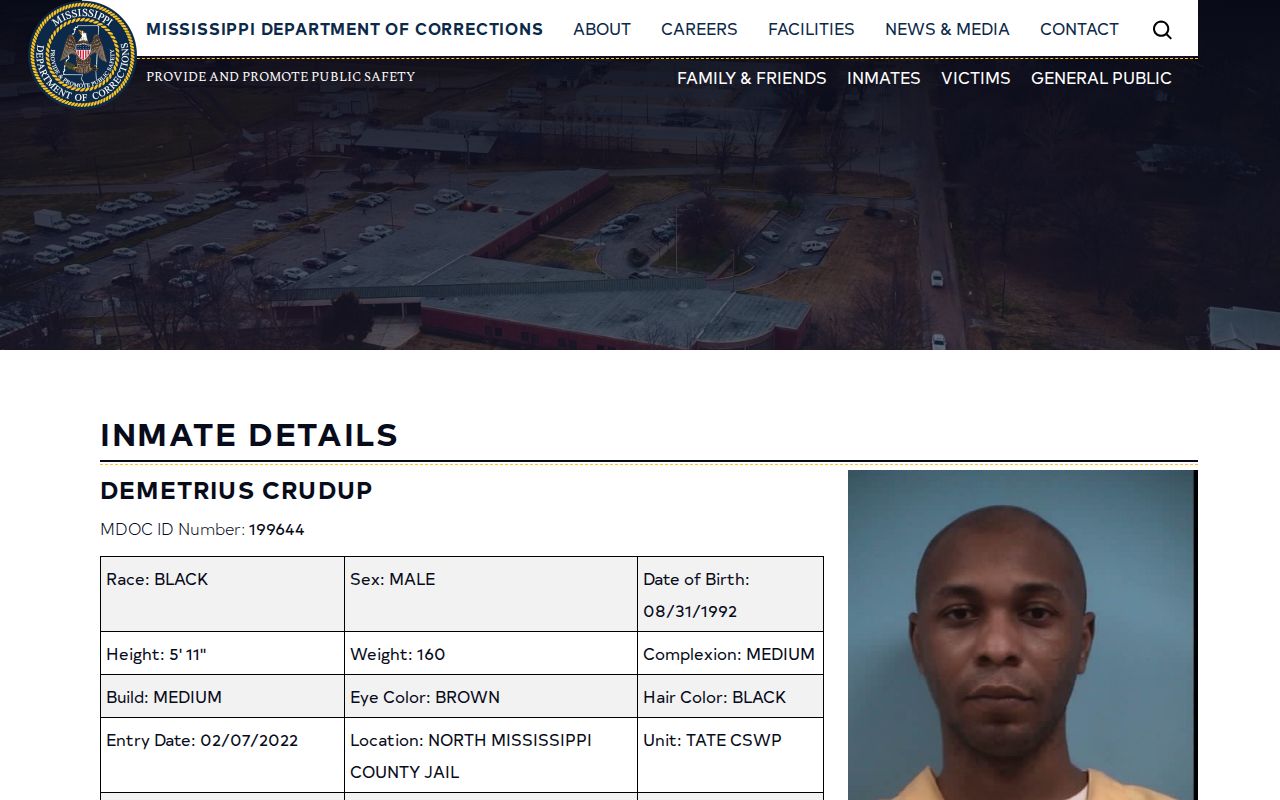
The visible date is tentative. A blank field does not prove imminent release, while a listed future date does not guarantee release on that day.
| MDOC field | How to read it |
|---|---|
| MDOC number | Primary identifier for matching the state record |
| Location | Current state placement shown by the public record |
| County of conviction | Connects a sentence to Lawrence County when applicable |
| Sentence information | Provides the judicial terms used in computation |
| Tentative Release Date | Current anticipated date, not confirmed departure |
Lawrence County Sentence Computation
Time computation begins with the judicial sentence. Concurrent terms run together to the extent the order allows; consecutive terms run one after another. Offense date, sentence date, mandatory minimums, habitual status, and statutory exclusions can change the result. MDOC then applies eligible pre-sentence jail credit. Its handbook states that credit must relate to the cause of incarceration, fall within the eligible time span, and not be counted twice. Lawrence County supplies relevant conviction and jail-credit data.
A missing or incorrect credit should be raised through the inmate’s case manager and the sentencing record. The MDOC Records Department can provide the proper written records route for a time sheet or offender data sheet. Public requests should identify the full name, MDOC number, county of conviction, approximate sentence date, and specific record. Trying to reconstruct a term from docket fragments can miss a consecutive sentence, correction, or exclusion.
- Jail credit
- Eligible time spent in custody before sentence that is credited to the same cause.
- Tentative release
- An anticipated state release date after current lawful adjustments.
- Maximum discharge
- The expected sentence end point without early-release allowances.
- Detainer
- A notice that another authority may seek custody when the current confinement ends.
Note: The sentence-specific MDOC time sheet and underlying court orders control; a public estimate cannot account for every legal input.
Lawrence County Earned Release Rules
Mississippi earned-time and ERS law is not a universal promise that every person serves 85 percent. Miss. Code Ann. § 47-5-138 and related provisions govern earned time and Earned Release Supervision. MDOC’s official example says a qualifying offense committed on or after July 1, 1995 may require 85 percent in a facility, with the remaining 15 percent potentially served on ERS. The words qualifying, may, and eligible are central.
ERS still requires review. Institutional behavior, classification, lawful exclusions, and an approved Mississippi residence affect the outcome. MDOC lists exclusions that include life terms, habitual-offender cases, certain mandatory parole-time rules, sex offenses, escape or attempted escape, and forfeiture of earned time, with current law controlling the full list. A person released on ERS remains under MDOC jurisdiction and can return to custody for violations.
The MDOC Types of Supervision page presents the ERS, tentative, and maximum milestones. Its captured explanation appears below.
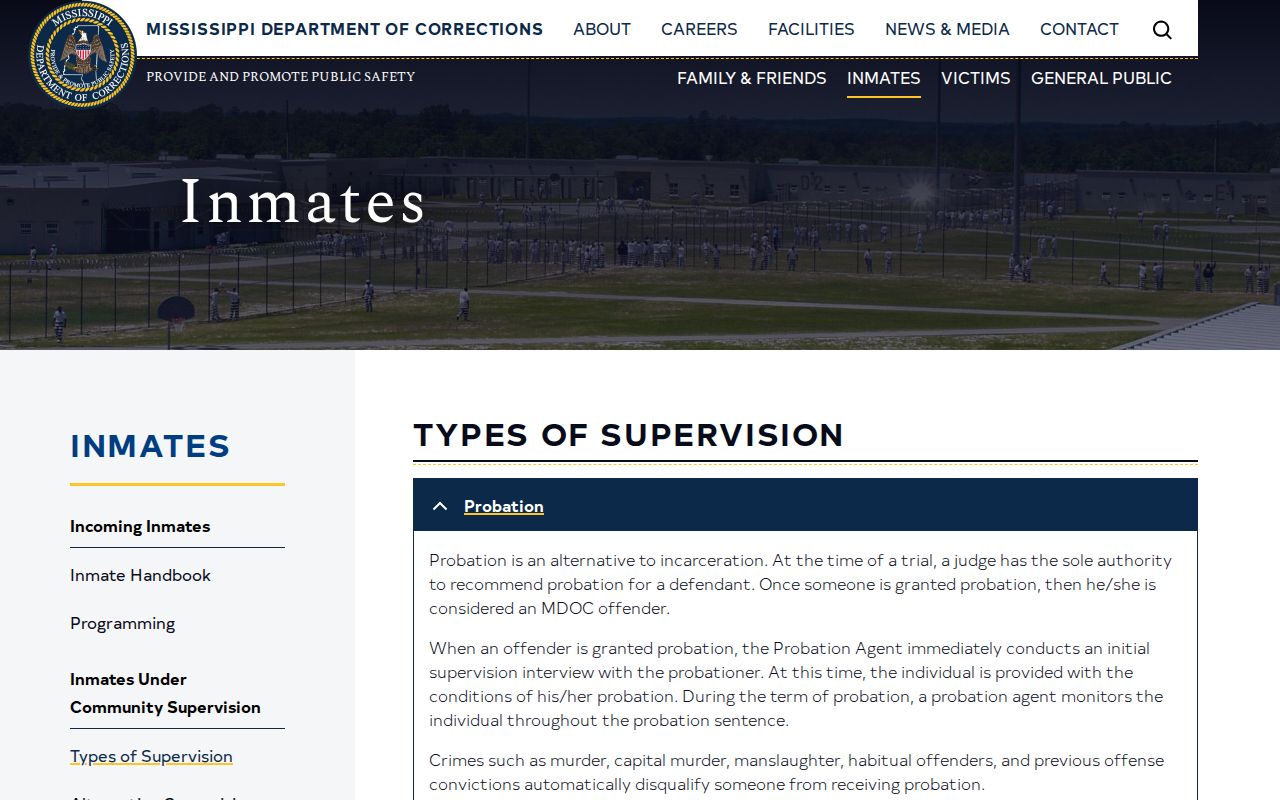
The state example belongs to MDOC sentences. No authoritative Lawrence County written good-time or weekend-release policy was found for county jail terms, so local calculations must come from the sentencing order and Sheriff.
Residence approval is part of ERS planning. Community Corrections inspects the proposed in-state address, and the person remains an offender under MDOC jurisdiction after placement. Conduct or classification problems may prevent release even when a computed ERS date appears. A family plan based only on the percentage example can therefore be wrong. The current case manager, time sheet, residence decision, and final movement record supply the usable sequence.
Why Lawrence County Release Dates Change
A Tentative Release Date is a current snapshot. New lawful inputs can move it forward or back. Some changes arise from credit or conduct, while others come from a court, the Parole Board, or another agency. A date viewed weeks earlier should be checked again near the expected release.
| Factor | Possible effect | Confirming source |
|---|---|---|
| Jail-credit correction | Changes credited time tied to the sentence | Time sheet and sentencing or jail-credit record |
| Earned-time accrual or loss | Moves the tentative date under applicable rules | MDOC computation record |
| Disciplinary action | May affect classification or earned time | Official MDOC decision and recalculation |
| Sentence modification | Changes the judicial term or structure | Signed court order |
| Detainer or hold | May cause transfer rather than community release | Custodian movement record and receiving agency |
| Parole or ERS decision | May allow, defer, or prevent conditional release | Board action or MDOC release record |
Parole eligibility under § 47-7-3 is sentence-specific. A Board grant may still await an approved plan, detainer resolution, or processing. MDOC states that parole and ERS dates are not guaranteed and that release processing can take time. The date on the screen should never be described as a fixed appointment.
A detainer needs separate attention. It is a notice that another authority may seek custody when MDOC's basis ends. The event may appear as a release from one institution while the person is transported to another jail, federal authority, or other agency. Confirm the destination in the movement record and then search the receiving system. The same caution applies after a court modification: the new order may change one sentence without resolving all active custody bases.
Three Lawrence County Release Milestones
Lawrence County state cases can involve three related computed milestones: an ERS date, a Tentative Release Date, and a Maximum Release or Discharge Date. The public MDOC detail screen specifically exposes Tentative Release Date. ERS can move an eligible person from secure confinement to community supervision before the sentence ends. Maximum discharge reflects a different end point and carries greater finality, but official paperwork remains the best proof.
This distinction is especially important when a person has been transferred from Lawrence County Jail into MDOC custody. The Sheriff’s local record can show transfer out, but it does not compute the later state release. MDOC must apply the state sentence and credits. If the person never entered MDOC custody, none of the state milestones should be borrowed for a county sentence.
For a disputed state milestone, ask for the public time sheet and compare it with the Lawrence County sentencing order and eligible jail-credit data. The inmate's case manager is the first internal route for a correction. The MDOC Records Department can answer a properly framed written request for the time sheet, offender data sheet, discharge certificate, or public date fields. That record-based process is more reliable than counting days from an arrest date.
Confirm Lawrence County Actual Release
Close to the tentative date, recheck the matching MDOC detail record and look for any stated change in location or supervision. The MDOC Parolee Search can show a person who has moved into conditional community release. A current parolee result does not mean full discharge, and an inmate-search miss does not establish a Lawrence County jail release. Each system covers only its own custody and supervision records.
Mississippi SAVIN and VINELink can provide a pending custody-change notice for a covered person. Registration and system limits are explained on the Lawrence County VINELink Check. Alerts may lag, and Lawrence County Jail participation must be checked in the live interface. For finality, request the MDOC discharge certificate, a Records Department response, or the county jail movement record that states the actual timestamp and destination.
Note: A transfer notice means custody may continue elsewhere; follow the receiving agency before calling the event a community release.